Sensory integration therapy (SI therapy)
The new SI therapy facilities have been completed at Vaasa Ombrelo. Read more!

The Vaasa ombrelo was renovated to include facilities for SI therapy, and occupational therapist Terhi Luhtala joined the team. Below you can read more about what SI therapy is.
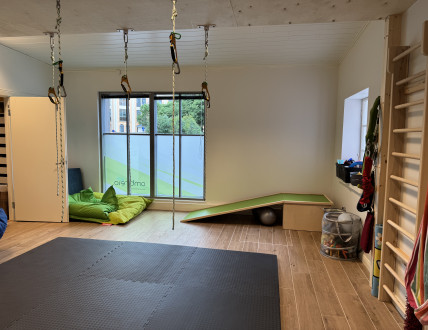
Sensory integration, or sensory processing, refers to how sensory information is organized in the central nervous system. The brain combines, distinguishes, and interprets sensory input received from a person’s body and environment so that the person’s actions can be purposeful.
Problems in sensory processing may appear as:
- difficulties regulating sensations, where the child overreacts or underreacts to, for example, touch, visual, auditory, smell, or movement sensations, or strongly seeks these sensations (sensory seeking)
- difficulties perceiving their own body and controlling balance, posture, and movements, so that movement may appear clumsy, producing movement sequences is hard, and learning new skills such as cycling, skating, playing soccer, using cutlery, and using a pencil is difficult
- difficulties managing behavior (self- and emotion regulation), because the child cannot ignore irrelevant stimuli, leading to short-lived, unfocused, and impulsive activity, and making it hard to maintain an appropriate level of alertness
- difficulties with executive functioning
- difficulties engaging in shared play with other children
- slow development of speech and language skills
- low self-esteem, because the child feels incapable
SI therapy is carried out in a therapy environment that offers rich sensory experiences and opportunities for active engagement, and for this reason it takes place at the clinic. The therapy space invites the child into active play and activity, while at the same time — almost without the child noticing — requiring extensive use of the body’s senses. The therapist analyzes and guides the activities based on the goals, but in a way that keeps the child actively involved in planning the activity/play. The aim of SI therapy is not to teach the child isolated skills, but to build the foundation on which the child’s learning is based. In addition to a specific type of environment, the therapist must have appropriate further training to provide this therapy. For clarity, it is important to understand that sensory stimulation and sensorimotor exercises are not the same thing as therapy carried out using the sensory integration therapy approach.
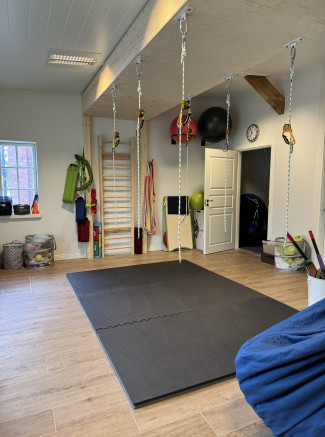
In order to confirm a possible SI-related difficulty, the child must undergo an EASI or SIPT assessment. Only a therapist who is certified to use these assessments may carry them out. The assessment includes the use of standardized assessment tools, observation, and interviews with people close to the child, as well as a feedback discussion.